

A Unique Culturally Symbolic Motif: Celtic Jewelry
Welcome Jewelry Aficionados to The Jewelry Design Venue! TJDV returns with a feature article spotlighting Celtic Jewelry!
With a unique, yet ambiguous past shrouded by the magic, mystery, myth and legend of the ancient, European Celts of the Iron Age and their leaders, the Druids, the true origin of Celtic Jewelry is difficult to determine.
Celtic Jewelry is highly decorative and aesthetically adorned with ancient Celtic symbols that incorporate cross, knot and spiral design motifs with subsequent pagan and/or christian meanings that reflect Celtic culture and traditional values as seen in Celtic Jewelry over 2,000+ years ago and even today!
In fact, many people believe that Celtic Jewelry gives them a “Feeling of Kinship”. So, let me enthusiastically assure you! By the articles end, I truly believe all prospective readers will have acquired a real appreciation, as I do, for Celtic Jewelry!
Celtic Jewelry and The Iron Age
Unlike Egyptian, Etruscan, Greek and Roman Jewelry, Celtic Jewelry has its ancient, Iron Age origins far north of Asia Minor, the Mediterranean Sea and the Alps, centralized around the Danube River in the geographical areas now known as Central and Western Europe.
Nevertheless, due to the lack of written historical record on the part of the areas indigenous people, the true origin of Celtic Jewelry on the historical timeline is still quite controversial. For instance, many archaeologists and scholars believe Celtic Jewelry has its origins in the Late Bronze Age, citing the type of jewelry worn by ancient, pre-Celtic Europeans found in unearthed grave sites dating back to that particular time period as evidence. While on the other hand, the majority agree Celtic Jewelry has its origins in the Iron Age.
Then, it is theorized the Celts, Celtic society and culture emerge. Plus, newly acquired materials, in addition to copper, bronze and iron, like gold, gold wire, silver and steel, advanced casting methods like lost-wax technique, advancements in gold smiting and metallurgy, and metal forgery take the forefront in Celtic Jewelry design in Iron Age Europe. Very impressive for the time!
The jewelry found at these ancient burial sites were very ornate and exquisite. One example, The Torq, a neck ring worn by both men and women in ancient celtic society, was an important cultural symbol in Iron Age Europe. Other jewelry found were gold arm bands, called fibulae, and classy metal rings.
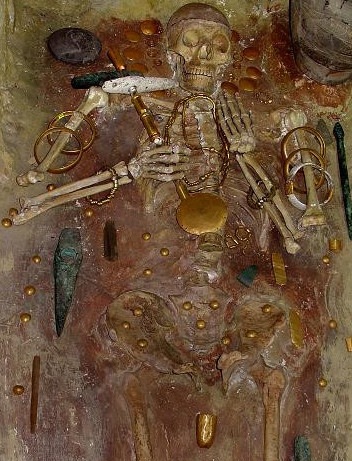
The Celts and The Iron Age
Ancient Celts in The Iron Age lived in tribes, clans and/or tribal confederations. Culturally, they shared similar customs, cultural symbols, languages, and religious beliefs, solely passed down from generation to generation through oral tradition and teachings. An ancient Celtic past completely devoid of written historical record!
In fact, the earliest surviving written historical accounts of the ancient Celts first appear circa the 3rd century BC by non-druids, like the Roman Empire, whom refers to the Celts as “Galli” or barbarians. In addition to being fierce and skilled warriors, ancient Celts were also devout pagans who championed life after death, eternity and the cycle of life.
They also practiced polytheism and animism openly and freely. In fact, most of their gods represent animals and nature with each having their own particular Celtic symbol and subsequent meaning.
Common Celtic Symbols found in Celtic Jewelry
The Celtic Cross is the most widely recognized celtic designs. Most probably equate 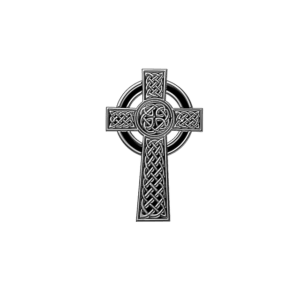 the origins of the celtic cross to early christianity and St. Patrick with the center of the cross representing the divination of Jesus Christ. However, this idea is a complete misnomer. The celtic cross actually predates christianity and has pagan origins with the center of the cross representing the sun god and the arms signifying the four seasons. The adaptation of the celtic cross by early christians made it easier to bring the ancient Celts and Druids into the christianity fold.
As a Neolithic Era symbol, the Triquetra, Triskele, Triskelion, Triple Spiral or Trinity Knot is one of the oldest known pagan celtic symbols. Literally meaning “three legs” or “three-legged”, the ancient triskele symbol has many different interpretations depending on its historical significance. In pre-Celtic society, the three spiral arms represent constant motion, energy, the cycle of life, or revolution. To Christians, the three legs represent the holy trinity, i.e. “The Father, Son and The Holy Spirit.”
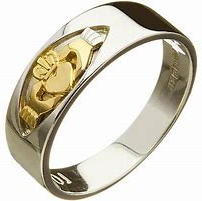
The Claddagh Ring, typically an Irish symbol represents love (heart), friendship (hands), and loyalty (crown).
Actually, The Tree of Life is another name given to the acacia tree and goes as far back as the Egyptian, Mesopotamian and Annalise Batista from Pixabay“> Assyrian cultures. It is the tree from which humanity stems. To Christians, the tree is the incarnation, death, and resurrection of Jesus Christ.
St. Brigid’s Cross is a design made of woven rushes and is meant to keep its bearer free from evil, fire, and famine.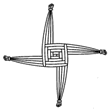
The Shamrock, the national emblem of Ireland, in Gaelic means ” little clover“. The four leaves are thought to represent life, love, faith, and luck. To St, Patrick, the shamrock represents the Holy Trinity under God.
Definition of Terms
Celtic or “Of the Celts” refers to the descendants of the ancient, pre-Celtic Europeans, known as Celts, that inhabited Central and Western Europe between 1,200 BC and 500 AD. Or pertains to the Celtic languages and cultures of 8 Celtic Regions of Europe, namely Asturias, Brittany, Cornwall, Galicia, Ireland, Isle Of Man, Scotland and Wales.
- Celts or name “Celt” is originally derived from the ancient Greek name Keltoi, meaning “those people north of the Alps”.
- The Druids, celtic meaning “knowing or finding the oak tree, are thought to be the higher-educated, spiritual leaders, philosophers, teachers, poets, and doctors of ancient Celtic society. Most druids were either killed or converted to christianity following the Roman occupation Europe and the arrival of Saint Patrick around 432 AD.
- The Iron Age is the last epoch of prehistory following the Stone Age and Bronze Age. In Central and Western Europe, the Iron Age begins about 800 BC and ends in 100 AD after the ensuing invasion and occupation of most all of Europe by the Roman Empire in the 1st Century after the Death of Christ, respectively. The Celts emerge as a true culture with similar religion and languages.
- The Bronze Age is the second epoch of prehistory following the Stone Age. In Europe, Celtic Jewelry begins to culminate in the Late Bronze Age from 1,200 BC To 800 BC.
Celtic Jewelry Today
As we have seen, Celtic Jewelry is as awe inspiring today as it was thousands of years ago. The unique cultural symbolic motifs that encompass Celtic Jewelry have truly stood the test of time. That is probably why it still remains a forerunner in jewelry fashion and jewelry design and always will! St Patrick’s Day is coming soon. So feel free to acquire a piece of Celtic Jewelry for a ‘Little Luck of Your Own!’

Leave a Reply
You must be logged in to post a comment.